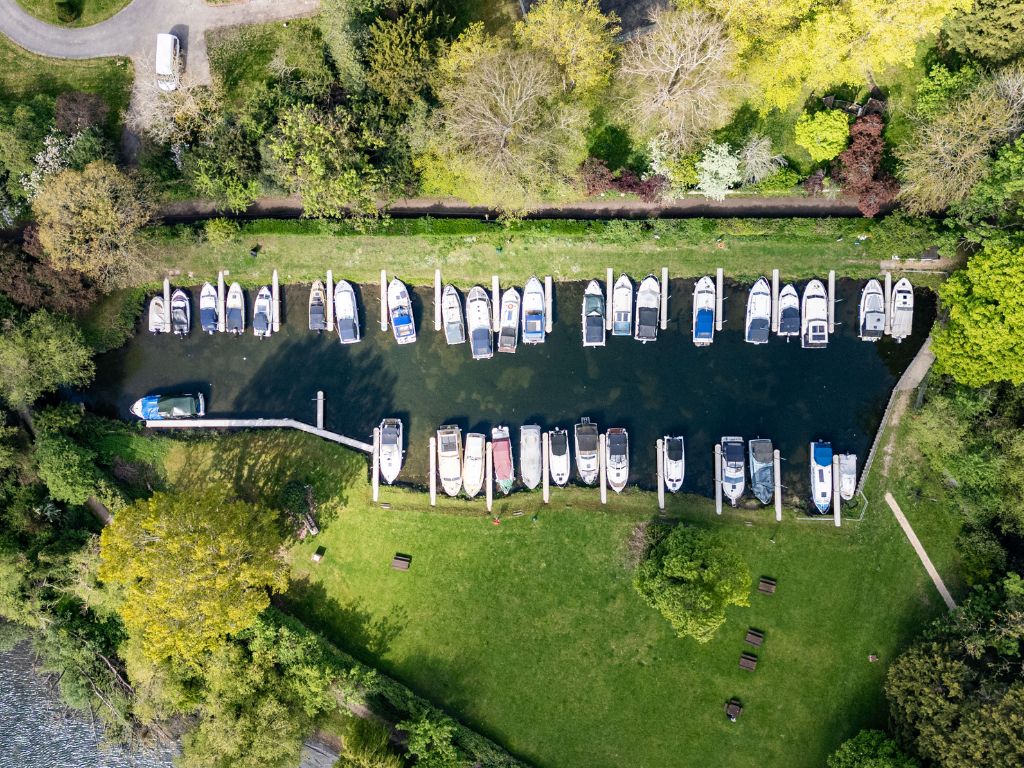
Each boater has different uses for their craft, so the perfect mooring lease is one that works the way you intend to use it. To find one that suits you, you need to consider every detail of the contract, including permissible activities, owners’ responsibilities and on-site security.
We’ve put together a quick guide to help you figure out all the key considerations you need to take into account, and what questions to ask if something isn’t clear in a proposed contract.
What to look for when finding the perfect long-term mooring lease for you
There’s a host of important factors to take into account when you’re looking for a mooring lease. Most importantly, you need to find out exactly what you’re paying for and who is responsible for them. Choosing from the different types of mooring is also a key consideration. Let’s look at the main things to research.
Mooring types: which is right for you?
In the UK, the main types of mooring are:
- River or canal towpath moorings. These are often managed by waterway authorities such as the Canal & River Trust. They tend to suit leisure boaters looking for a straightforward mooring with access to the wider waterway network.
- Marina berths. This is a professional, fully managed setup, often with on-site facilities, security, parking and perhaps a bar, café or shop. They’re ideal for those who want convenience and a community feel.
- Private moorings. These are owned and managed by an individual or a business. They can offer more flexibility, as owners are often open to contract negotiations. How well it’s maintained and operated all comes down to the owner, so look for more professional operations for peace of mind.
- Pontoon or jetty moorings. These are common on tidal rivers and estuaries, and are designed for sea-going vessels rather than canal boats or inland river cruisers.
Before settling on a type, ask yourself how often you plan to use your boat, whether you intend to live aboard, and how important it is that you’re connected to other waterways.
Your lease agreement
Before you sign on the dotted line, make sure you can answer these questions:
- Who owns the mooring? Is it privately owned, managed by a waterway authority or held by a marina operator? Ownership affects your contract, as well as the long-term predictability of the arrangement.
- What is the lease term and how is it renewed? Short leases certainly offer flexibility, but if you find a spot you fall in love with, you might find it booked up when you’d have liked to extend it. On the other hand, a lengthy fixed-term lease could tie you up for longer than you want. Most people are happy with a mid-length lease, however, as they like to take advantage of some stability mixed with that sense of exploration that boating brings.
- Are there break clauses or exit penalties? What happens if your circumstances change? Can you leave early? Are you allowed to sublet? If you sell your boat, do the new owners get to keep your lease until it expires? It’s worth looking into these issues, even if it’s unlikely that the situations materialise.
- Are there rent reviews? It’s normal for all landlords to review costs, be it to cover inflation or to reflect the changing nature of an area. How often does this happen? How much notice do you get? Are there caps on increases? What size of increase would allow you to terminate the contract?
- Who has liability? You need to know exactly who is responsible if there’s any damage to the mooring, the boat or third parties.
What’s included and who is responsible for maintenance
There will always be a list of costs that are already covered by your lease payments within your contract, and that can save you money and stress as you settle down to enjoy your boating. However, some charges might be metered or extra fixed costs. Find out whether the following are included or extra:
- Utilities. Are electricity, WiFi, water and waste disposal included in your lease, or are they charged separately? It’s not uncommon for electricity to be metered, although water is usually at a flat fee, included in the contract.
- Hygiene facilities. Are there showers, toilets and laundry facilities on site? Are these covered under the lease or will they incur additional charges?
- Maintenance and repairs. Who is responsible for maintaining the pontoon, jetty or mooring equipment?
- Security. Is the site gated or staffed? Is there good lighting? Is there CCTV? A lot of individual private moorings can be hit and miss, but organised marinas usually have extensive security measures.
- On-site services. Some moorings include access to services specifically for boating, such as repair and maintenance specialists. This might be included, available at a discount for leaseholders, or simply an added cost. It’s worth knowing if such people are on hand.
Always try to visit the site in person and take a look around to get a feel for the condition of the facilities before signing. Have a chat with leaseholders and staff, too.
Restrictions within the lease
You might be surprised to find out that something you would consider perfectly normal is actually disallowed at the site. Depending on how you intend to use your mooring, you should find out about:
- Liveaboard restrictions. Moorings intended for leisure purposes often forbid occupiers to live there permanently. Find out the policy for a potential mooring if your boat is your permanent home.
- Boat type, size or age. Some moorings have limits on the type, size or even age of boats. Pay attention to this if you plan to upgrade your craft, as your new one could fall outside what’s allowed.
- Visitors and guests. Can friends or family stay on the boat overnight? Some agreements have limits on visitors other than the named tenants.
- Allowable activities. There are often rules about making noise after a certain time, or things like open fires or barbecues. It’s worth noting that most tenants appreciate these “restrictions” as they see boating as a relaxing pastime. There are moorings in livelier places for those who want more of a holiday atmosphere.
- Alterations. Are you allowed to make modifications to your boat or the mooring? You might want to add a gangplank or decorations like plants in pots or lighting, for example.
- Commercial use. If you run a business from your boat, even if it’s part-time, check whether the lease permits this.
Don’t forget – you need to think carefully about not just now, but whether your lease will still work if your needs evolve.
What about security?
As with all mooring leases, you need to know what security is included and who is responsible for it. Not only is it good to have that feeling of safety and peace of mind, but also, a secure site with restricted access, manned posts, good lighting and CCTV will greatly reduce your insurance premiums.
Security isn’t just about protection from crime, however. Non-malicious damage, such as accidental vessel collisions, or damage caused by someone working on the jetty, do occasionally happen. Fires can also break out due to electrical failures or gas leaks. In all these cases, on-site security can help to spot issues earlier and help resolve disputes.
While private marinas often have 24/7 security as standard, moorings that are off the beaten track, or the only spot on a stretch of waterway, are unlikely to have. Nowadays, it’s possible to monitor your own boat with internet-connected remote cameras, motion sensors and smoke detectors. But if you’re a hundred miles away when an alert is triggered, what is your course of action? Is there someone you can contact on the site, or a local security firm? Do you know how to contact the police?
Security is a huge plus for any boater looking for a mooring. It should be treated as an essential component of any contract, not an optional extra. Luckily, it’s generally taken seriously in the industry, especially at marinas, so this section is mainly to identify risks on smaller, less organised sites.
Conclusion
Hopefully, this article has covered all the important things to know and questions to ask before you agree to a lease for your pride and joy craft. If there were more considerations than you previously thought, that’s good – helping you approach the process with a greater understanding will ensure you have a well-suited mooring contract.
As with any lease agreement, you can reduce your chances of making a bad decision by choosing a professional mooring owner, who has their lessee’s best interests at heart. If you’re planning to get a mooring in the Thames Valley or Grand Union Canal area, speak to Sorbon Estates – we’ve got some top quality moorings in phenomenal locations all around the South East of England.